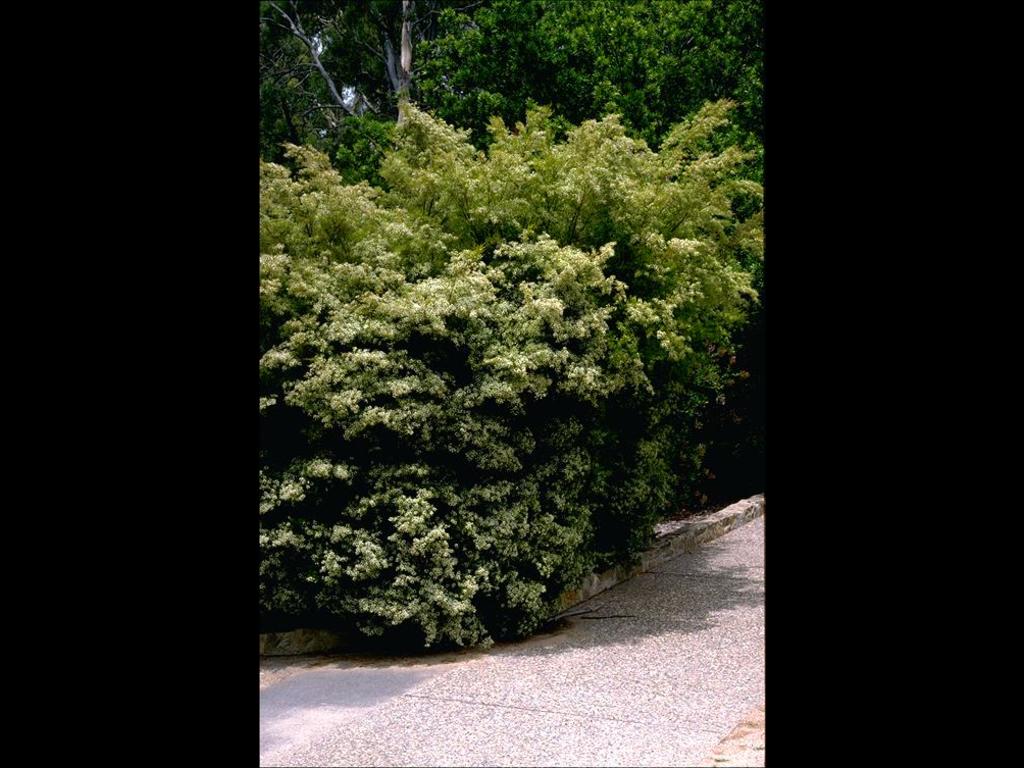
Babingtonia similis 'Howie's Feathertips'
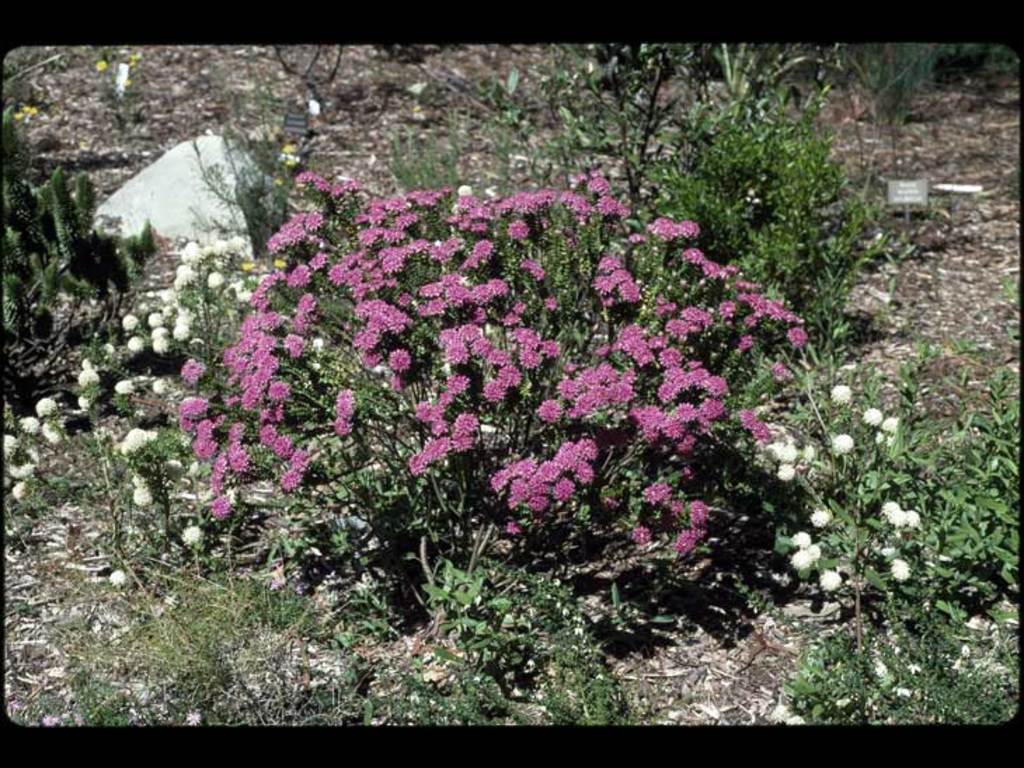
Pimelea ferruginea 'Bonne Petite'
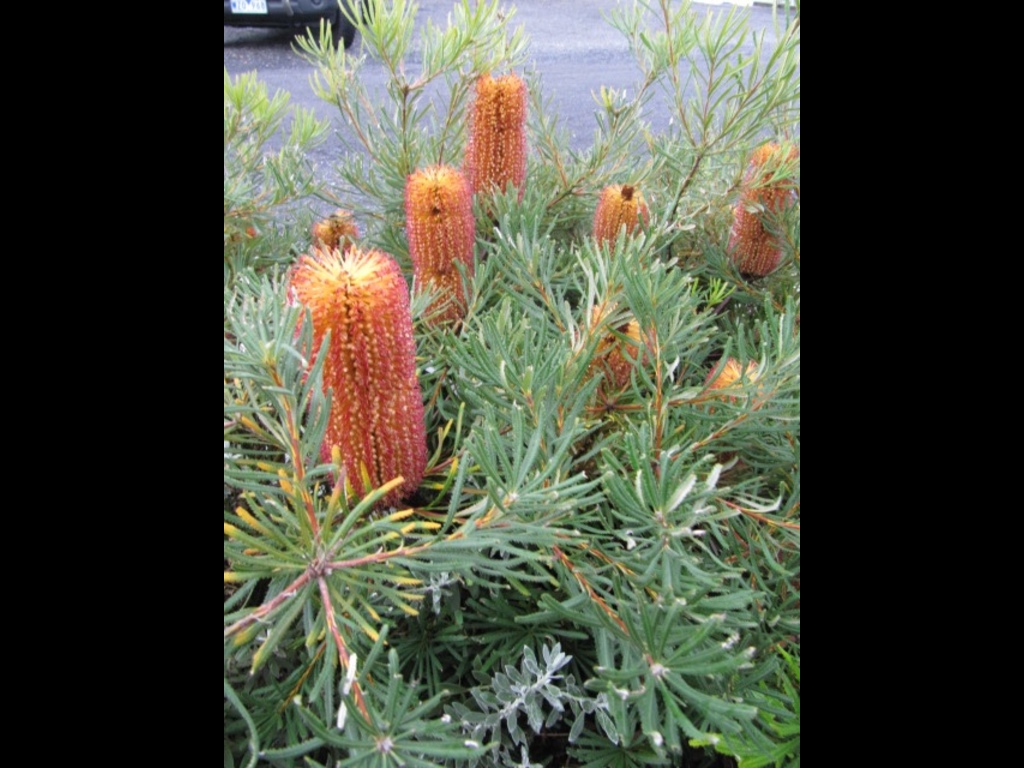
Banksia spinulosa 'Honey Pots'
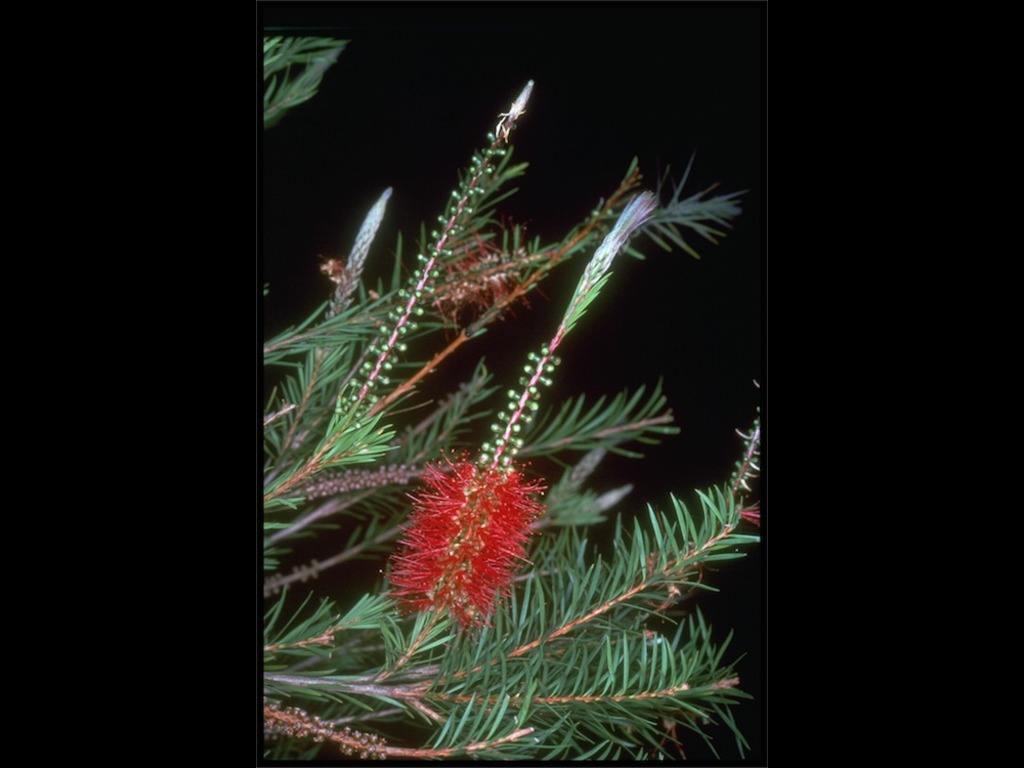
Callistemon 'Packers Selection'
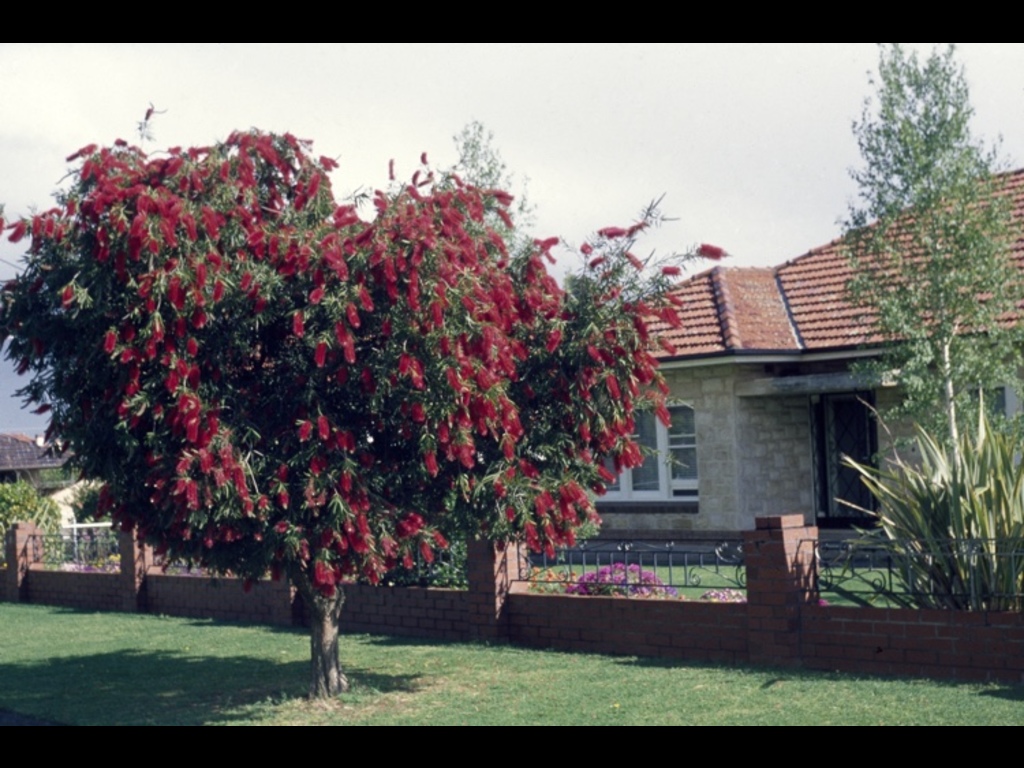
Callistemon 'Harkness'
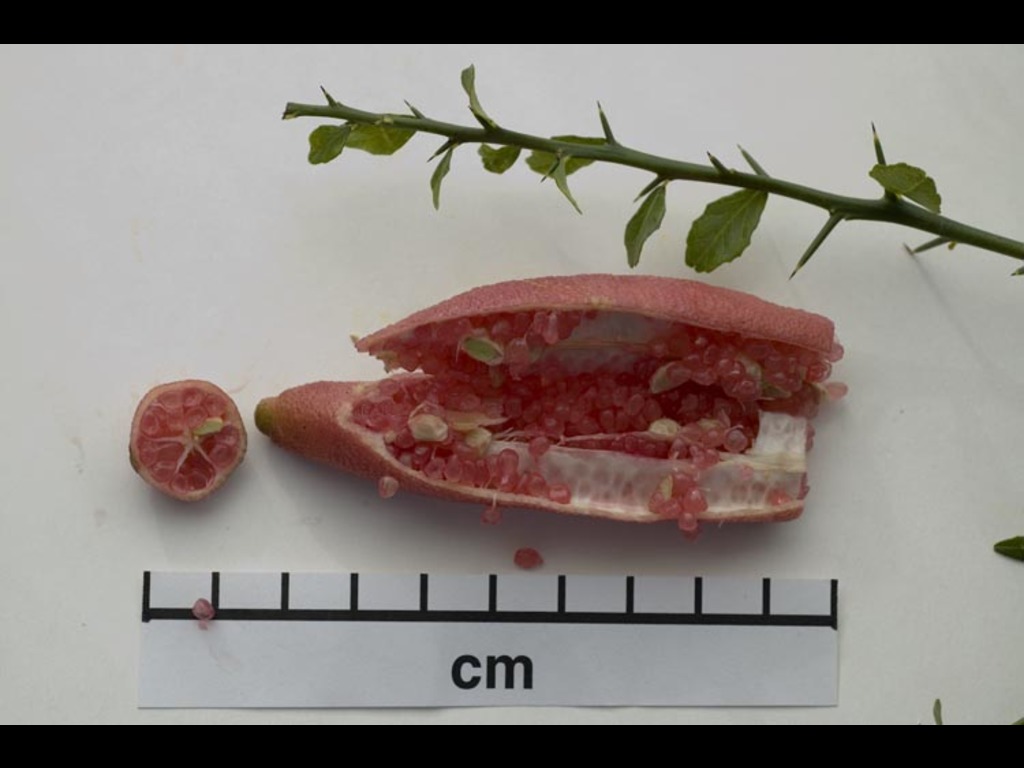
Citrus australasica 'Pink Ice'
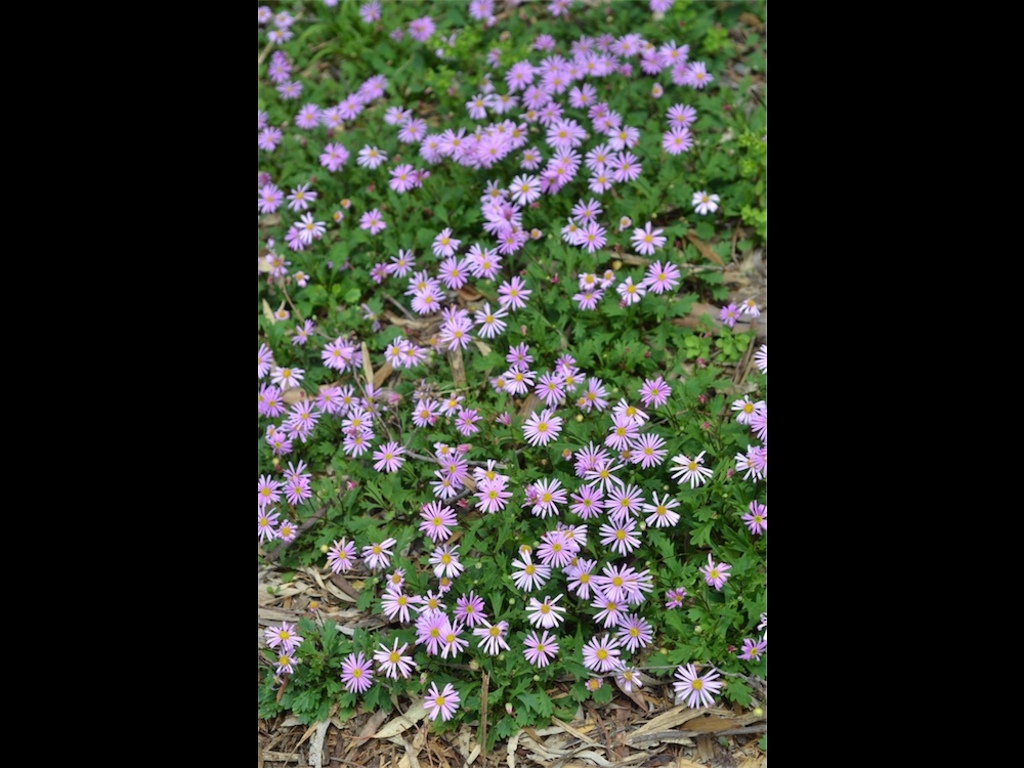
Brachyscome 'Strawberry Mousse'
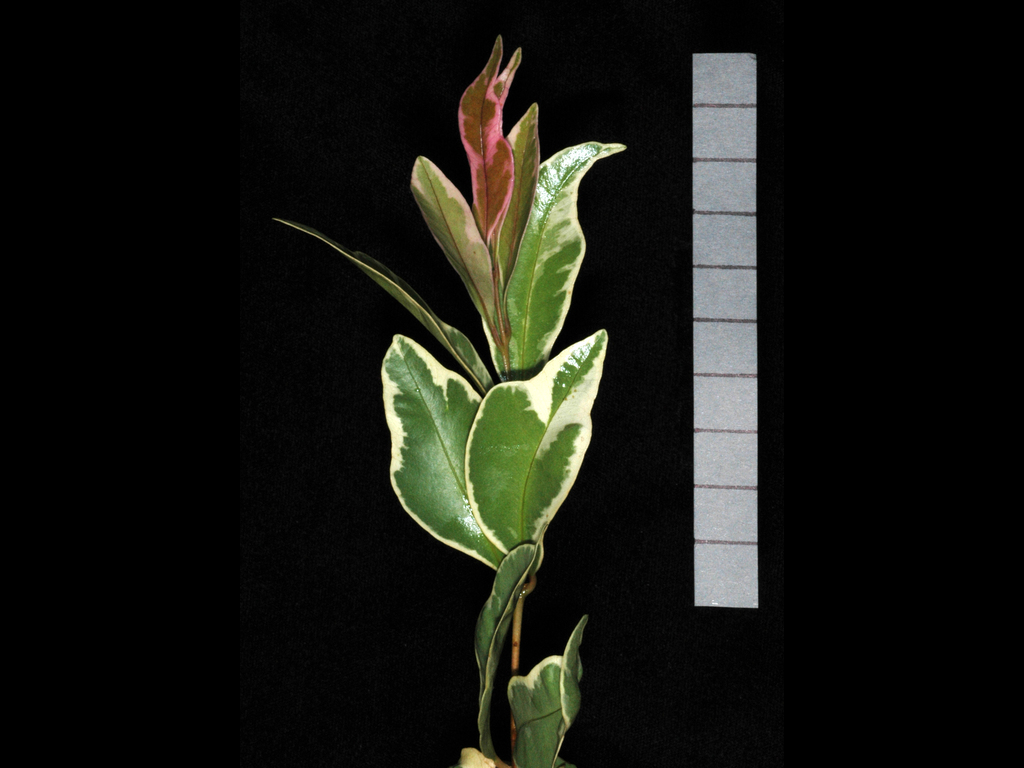
Acmena smithii 'Mauve Maisie'
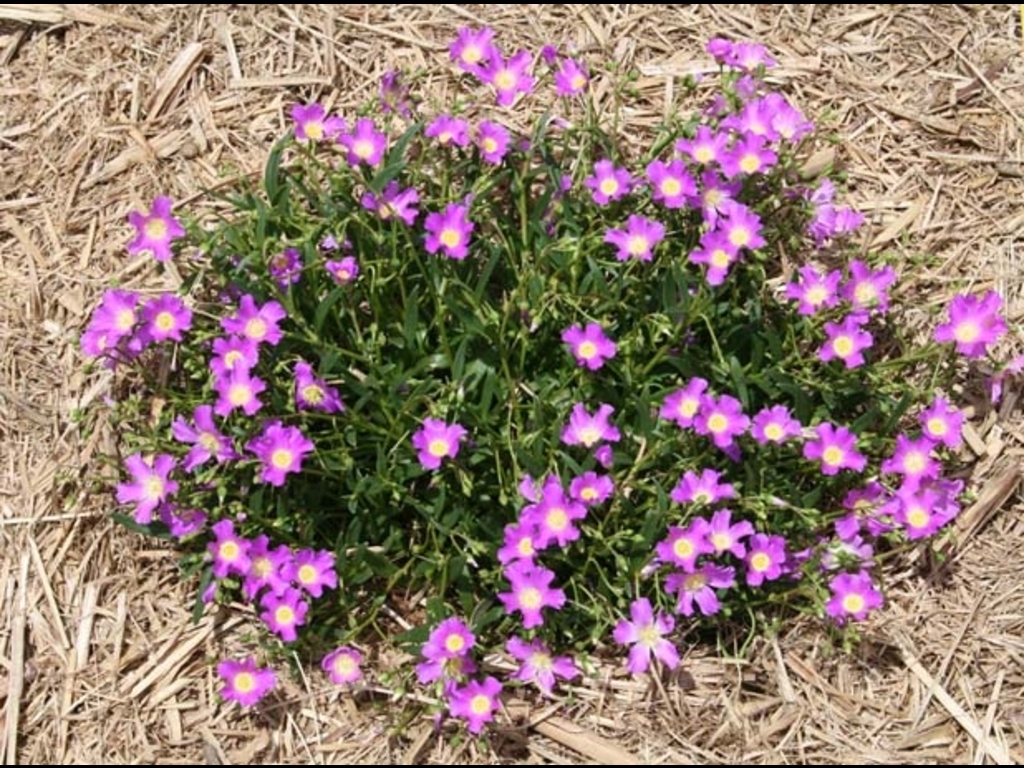
Calandrinia balonensis 'Mystique'
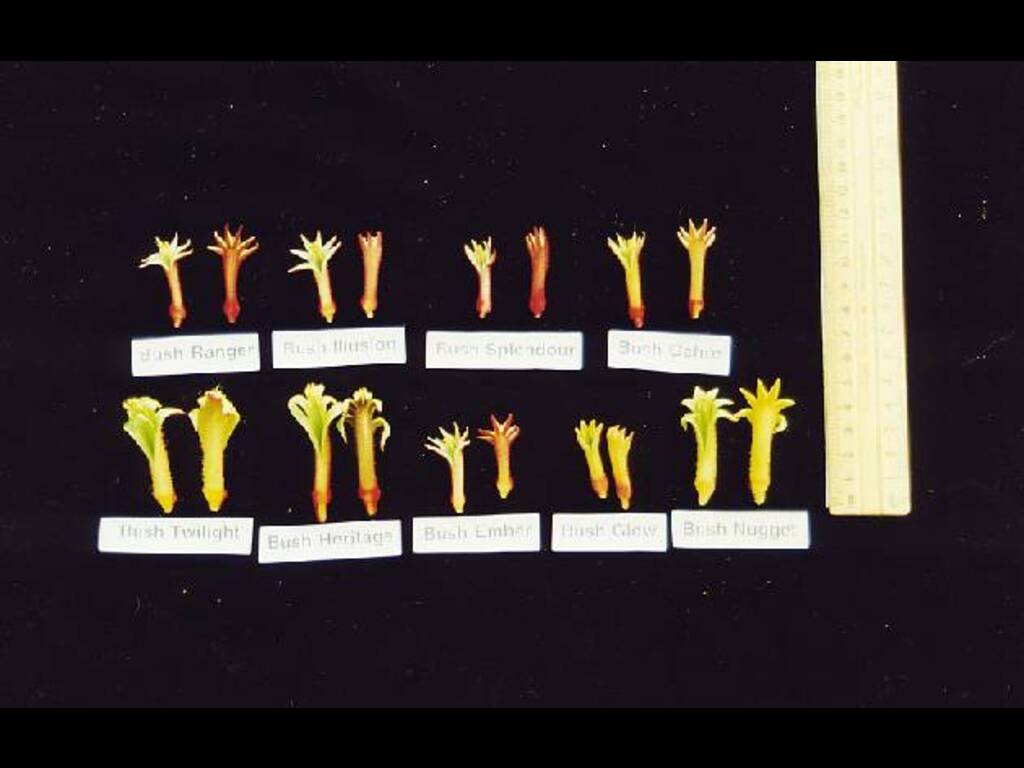
Anigozanthos 'Bush Splendour'
Babingtonia similis 'Howie's Feathertips'
Note:
Formerly Baeckea 'Howie's Featherfolia'.
It is a small dense shrub growing to a height of about 500mm
by 1m wide. The leaves are up to 10mm long by 1mm wide. Individual flowers
are about 6mm wide.
Diagnosis:
This cultivar is different from the known normal forms of its
parent in its lower height, fine foliage and weeping habit. In all other
respects it is similar to its parent.
Pimelea ferruginea 'Bonne Petite'
This cultivar is a very compact shrub to 0.7m tall by 0.7m
wide. The flowers are cerise pink in clusters and are found in the spring
Leaves oval shaped and ca. 12mm long.
Diagnosis:
Pimelea 'Bonne Petite' is very similar to P. 'Magenta Mist' but
differs in the following ways. P. 'Bonne Petite' has a shorter internode
distance making it more compact; the flower heads are slightly smaller,
being 20-25mm across compared with 30mm for P. 'Magenta Mist'; the flowers
are a paler pink; the flower colour fades less quickly; the leaf apex is
slightly pointed compared to the rounded apex of P. 'Magenta Mist'.
Banksia spinulosa 'Honey Pots'
Strong honey fragrance of flowers
Habit/description:
A moderately dense small shrub
Size:
1m H x 1.5m W
Flower colour: Golden with red styles
Flower size:
50-200mm long x 40-80mm in diameter
Flowering time:
Mar - Aug
Frost hardiness:
High
Years in cultivation:
Introduced in June 1999
Has the cultivar been tested:
Has been on sale in all Eastern states of
Australia for over 10 years
Callistemon 'Packers Selection'
This cultivar is a fast growing and pendulous shrub ca. 1.5m
tall by 1.5m wide. Inflorescences are deep red in colour and ca. 9cm long,
but narrow in diameter (ca. 3cm). Flowering is spasmodic all year (as
observed under conditions in WA) with profuse flowering in October,
January-February and March-April (also in WA).
Diagnosis:
Callistemon 'Packers Selection' closely resembles C. subulatus.
It is possible to distinguish the cultivar by its very pendulous habit
compared with the more erect habit of C. subulatus and by the much longer
inflorescences. The flowers are a deep red fading as they age.
Comparators:
Callistemon subulatus CBG 7801196. NSW South Coast,
14Km north of Yowrie PO on north side of Tuross River.
Callistemon 'Harkness'
The leaves are entire and up to 130mm long by up to 12mm wide.
The flowers are produced in long dense "bottlebrush" clusters. These
clusters are produced in bunches of up to 11 "brushes". Individual
"bottlebrushes" are red and up to 150mm long by about 55mm wide. The
stamens are the colourful parts of the flower.
Diagnosis:
This cultivar is different from other Callistemon cultivars in
its long dense and clustered red inflorescences.
Citrus australasica 'Pink Ice'
A moderately dense tall shrub or small tree to a maximum of
2.5-3 metres high by1.3 metres wide. Axillary spines solitary, straight to
25mm long. Leaves are simple, obovate to elliptic, glabrous. Flowers white
approximately 10-15mm in diameter, from July-September. Fruit a cylindrical
berry, 4-8 cms long, 15-25mm in diameter. Variation of skin colour green to
brown & pink, vescicles from clear to different shades of pink.
Diagnosis:
CITRUS australasica ‘Pink Ice’ is a medium growing selection
which bears fruit with vescicles varying from clear/translucent, to deep
pink.
Brachyscome 'Strawberry Mousse'
Spreads by suckering and grows well ion its own or in amongst other groundcovers. Grows 10-15 cm tall and has bright pink daisy flowers for most of the year. Frost resistant and relatively drought hardy.
Acmena smithii 'Mauve Maisie'
Large shrub with variegated leaves and pink new foliage growth.
Calandrinia balonensis 'Mystique'
Habit/description:
A compact small herbaceous shrub, 150mm(H) x 400mm (W), Flowers vibrant pink-purple(mauve), 40mm diameter from Jan to Dec (all year)
Diagnosis : has finer leaves, shorter internodes and greater basal branching forming a more compact plant habit.
Frost hardiness: Medium
Years in cultivation:
The cultivar was first selected as line Cb 176-6 on
the 5th December 2007 and first introduced in August 2009
Has the cultivar been tested:
In ground trials Cleveland QLD Nov 2007 - May
09; Pot trials Gatton QLD Dec 07 to Mar 2010, Mooroolbark & Skye VIC, (Nov
08 - Oct 09) Bonsall CA USA (Aug 07- Aug 08)
Anigozanthos 'Bush Splendour'
Compact growing Anigozanthos hybrid having an average height of around 30cm and red flowers.
What is ACRA?
The Australian Cultivar Registration Authority (ACRA) is an organisation whose primary function is to register cultivars of Australian plants. The activities of ACRA are co-ordinated by the Registrar, Secretary and a committee formed by representatives of each of the major regional (State) botanic gardens, the Australian Native Plants Society, and the Greenlife Industry Australia. More...Our sponsors